

Written by Nim Joshi
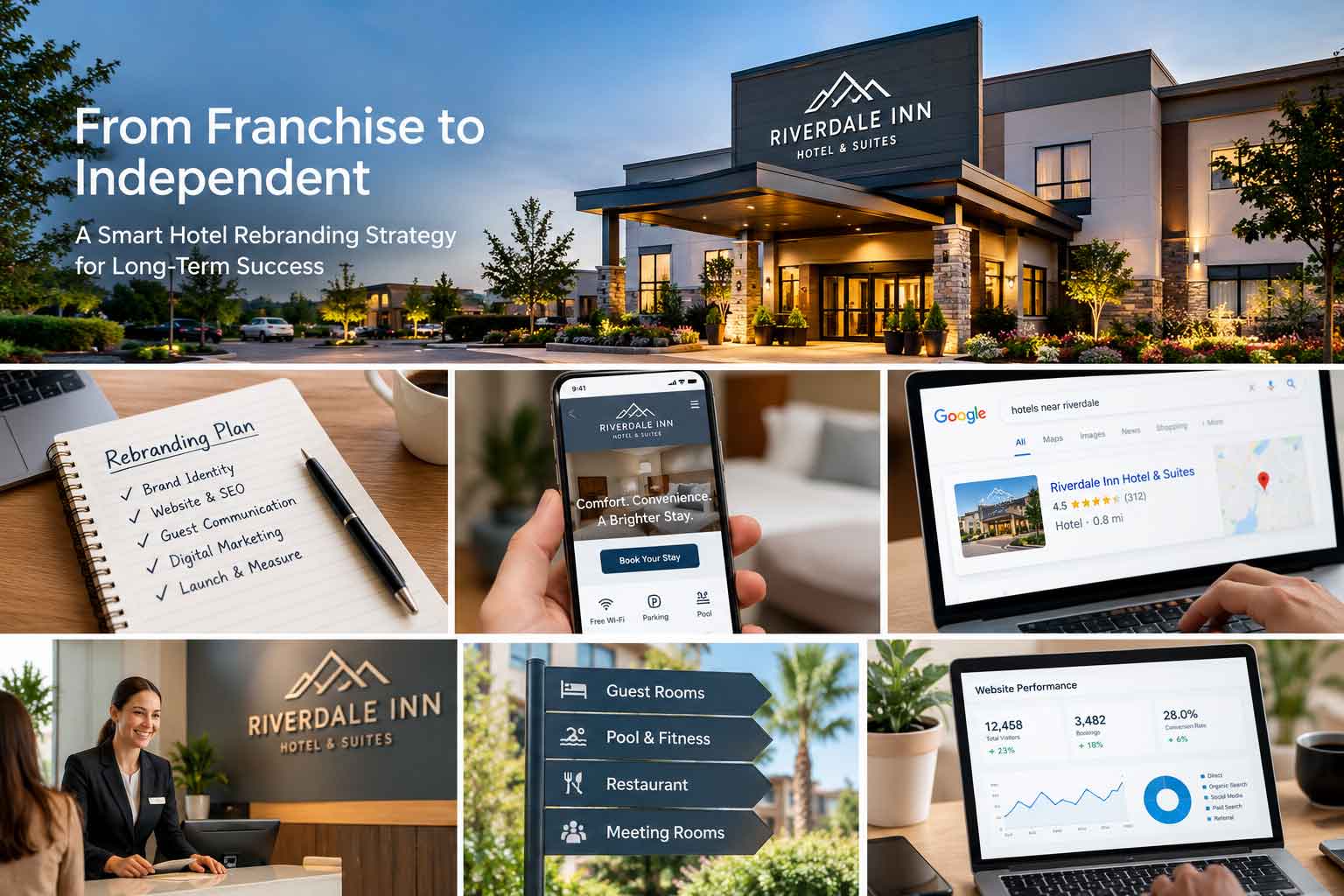
Leaving a hotel franchise? Learn how to plan your hotel rebrand, protect your online visibility, manage reservations, build a new identity, and attract guests on your own.
Leaving a hotel franchise, often called “dropping the flag,” can be an important turning point for a property. It gives owners the opportunity to establish their own identity, rethink marketing expenses, and create a guest experience that reflects their vision.
But becoming an independent hotel involves more than removing a familiar sign. Guests may still search for the former brand, online listings may show outdated information, and the hotel’s website, booking links, reviews, and marketing materials may need attention at the same time.
A successful hotel rebranding strategy addresses these challenges before the transition happens. The goal is not simply to replace a franchise name. It is to help guests recognize the property, understand what it offers, trust the new brand, and feel confident making a reservation.
1. Start With a Clear Hotel Rebranding Strategy
Before choosing a name, logo, or color palette, decide what the hotel should stand for once it leaves the franchise.
Consider what makes the property valuable to its target guests. Is it an affordable, comfortable place to stay? Is it close to a hospital, university, airport, business district, or popular attraction? Does it serve contractors, families, road travelers, event attendees, or extended-stay guests?
These answers should guide the new brand.
Start by reviewing the property’s performance, guest feedback, competitive position, room mix, amenities, and primary booking sources. Identify what guests already appreciate and where the experience could improve.
A useful rebranding strategy defines:
-
- Target guests: Who is most likely to book and return?
- Brand positioning: Why should travelers choose this hotel?
- Guest promise: What can guests consistently expect?
- Competitive difference: What does the property offer beyond a room?
- Business objectives: Is the priority increasing occupancy, improving direct bookings, attracting new guest segments, or strengthening profitability?
Avoid positioning the hotel solely around being independent or cheaper than branded competitors. Guests ultimately want a reliable stay that meets their needs.

2. Choose a Name and Identity That Can Grow
Your new hotel name becomes the foundation of your independent brand. It should be easy to remember, straightforward to pronounce, and relevant to the property’s location or guest experience.
Before committing, check domain availability, relevant business name requirements, social media handles, and potential trademark conflicts. Consult appropriate legal professionals when necessary.
Next, develop a consistent identity that extends beyond the logo. This includes typography, colors, photography, signage, tone of voice, and the overall feeling guests experience when interacting with the property.
The visual identity should match reality. A hotel positioned around comfort and value should communicate cleanliness, convenience, and trust, not luxury it cannot deliver.
A strong independent hotel brand makes the property recognizable without relying on a national franchise name.

3. Plan the Transition Before Removing the Flag
Timing matters. Review the franchise agreement with qualified legal counsel and confirm termination dates, de-branding requirements, fees, restrictions on brand assets, reservation-system access, loyalty-program obligations, and the treatment of existing bookings.
The operational checklist should also address physical signage, printed materials, staff uniforms, in-room collateral, telephone greetings, email addresses, and third-party technology.
Do not assume every franchise handles reservations, guest data, and marketing access in the same way. Confirm the specific requirements and responsibilities in writing.
Prepare a transition schedule that assigns responsibility for each task. Coordinate the brand removal, new website launch, booking arrangements, signage installation, and public announcement so guests don’t wonder whether the hotel is open or whether their reservation remains valid.
Most importantly, communicate any changes to affected guests directly when appropriate. Their confidence in the transition matters more than the speed of the rebrand.
4. Build a Website That Supports Direct Bookings
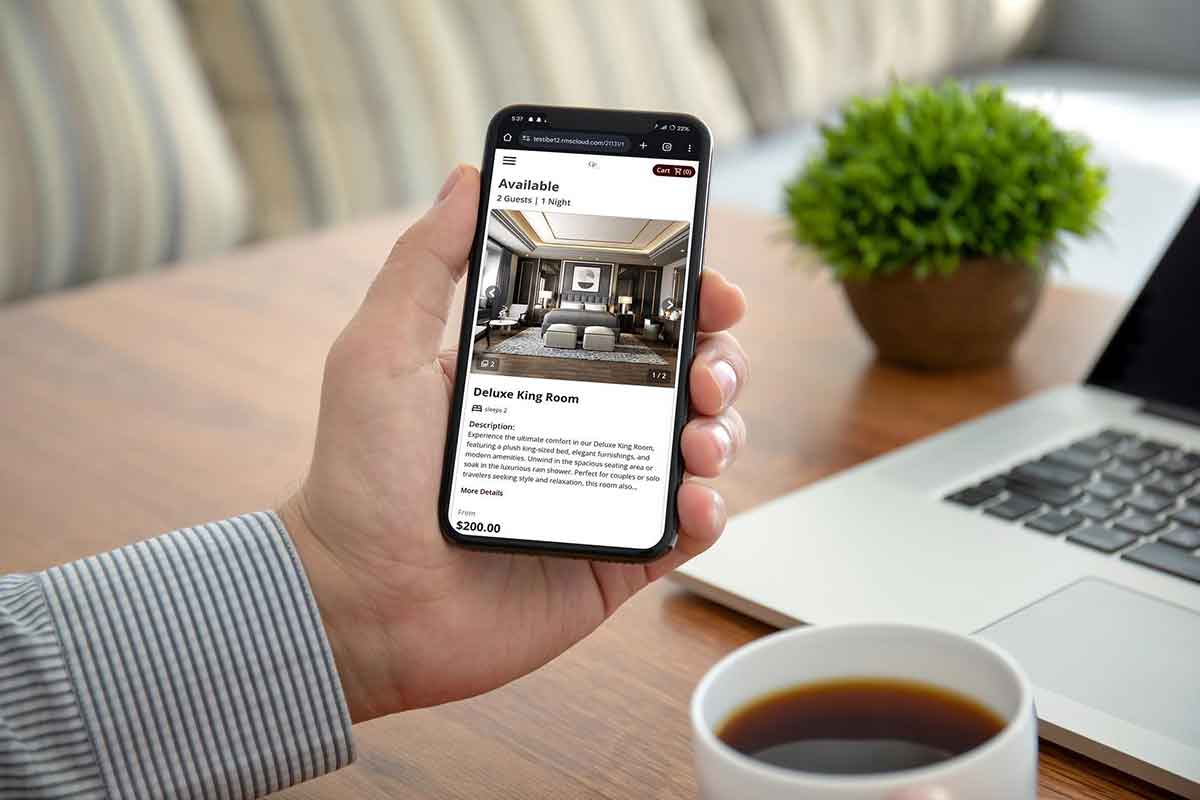
For an independent hotel, the website is central to its identity and guest-acquisition strategy. It must do more than look attractive. It needs to answer questions and make booking straightforward.
A well-planned hotel website should include:
-
- Clear room descriptions, current rates where appropriate, and accurate amenity information.
- Professional, authentic photography of rooms, bathrooms, common areas, and the property’s exterior.
- Location information, nearby attractions, parking details, policies, and accessibility information.
- A prominent booking path that works well on mobile devices.
- A secure, reliable booking-engine integration.
- Clear contact information and answers to common guest questions.
Review the booking journey from the perspective of someone who has never visited the property. Can they understand what the hotel offers, see what matters to them, and complete a reservation without unnecessary friction?
Also confirm who controls the domain, website files, analytics, booking integrations, and other digital assets. Establish ownership and access before the franchise transition whenever contractually permitted.
5. Protect SEO and Google Visibility During the Rebrand
One of the most overlooked risks of dropping a hotel franchise is losing the online visibility built around its former name.
Travelers may continue searching for the old brand, while search engines and external websites gradually reflect the new identity. A poorly managed website migration can also create broken links, lost landing pages, and confusion about the property’s identity.
Google’s official site migration guidance recommends planning URL changes, mapping old pages to relevant new destinations, implementing permanent redirects, submitting an updated sitemap, and monitoring search performance.
For hotels, this means:
-
- Keep the existing domain when appropriate and legally possible, rather than changing everything unnecessarily.
- If URLs or domains must change, map old pages to their closest relevant new pages.
- Use permanent redirects, commonly 301 redirects, where appropriate.
- Update internal links, social profiles, advertising links, and important external listings.
- Monitor Google Search Console for indexing issues, traffic changes, and broken pages.
Keep relevant redirects in place for at least a year, following Google’s guidance, and consider maintaining them longer when practical.
What about Google Business Profile?
Review the property’s Google Business Profile carefully. Google has specific rules for hotel rebranding, including when you can update an existing profile and when you may need a new one. The correct approach depends on the nature of the name change and whether the property meets Google’s eligibility criteria.
Follow Google’s hotel Business Profile guidance rather than automatically creating a new listing or deleting the existing one.
Also update booking platforms, maps, directories, social accounts, and other important references. Consistent, accurate business information helps travelers identify the correct property.

6. Prepare for AI Search as Well as Traditional Search
Travelers increasingly use conversational search tools to compare accommodations, ask destination questions, and find properties that fit specific needs.
An independent hotel’s website should clearly explain what the property offers, who it serves, where it is located, and what guests can expect. This supports traditional SEO while making information easier for AI-powered search experiences to interpret.
Generative Engine Optimization (GEO) and Answer Engine Optimization (AEO) are useful ways to describe this broader effort. The practical work includes accurate business information, helpful location pages, well-structured content, descriptive image text, and direct answers to genuine traveler questions.
For example, a hotel near a medical center could explain parking options, driving directions, room amenities, and nearby services. A property serving event visitors could publish useful information about local venues and transportation.
Do not create dozens of thin pages or promise that a particular tactic will guarantee inclusion in ChatGPT or other AI search results. Focus on accurate, useful information that helps travelers make decisions.
7. Rebuild Trust Through Reviews and Guest Communication
Guests familiar with the former franchise may wonder whether the ownership, facilities, service, or standards have changed. Your communication should answer those concerns honestly.
Announce the new name across the website, social media, email communications, and relevant local channels. Explain what is changing and what guests can continue to expect. If renovations, amenities, management, or policies have changed, communicate those details accurately.
 Encourage genuine guest feedback and respond professionally to reviews. Do not attempt to transfer, fabricate, or manipulate reviews. Follow each platform’s policies and, when relevant, explain the property’s transition transparently.
Local relationships can also support the new brand. Connect with nearby employers, event organizers, hospitals, universities, attractions, and tourism organizations where appropriate.
8. Measure the Results After Launch
Evaluate a rebrand by business outcomes, not just whether the new logo looks good.
Establish a baseline before launch and track performance afterward. Useful measures include:
-
- Website traffic and branded search queries.
- Google Business Profile visibility and customer actions.
- Booking-engine visits and completed reservations, where tracking is available.
- Direct booking revenue and acquisition costs.
- Paid advertising performance.
- Review volume, guest sentiment, and recurring feedback.
- Occupancy and revenue trends, considered alongside seasonality and market conditions.
Expect some temporary search fluctuations during a website migration. Investigate sustained declines, broken booking paths, inaccurate listings, or missing pages rather than assuming every change is a normal part of rebranding.
Make Your Independent Hotel Brand Work Harder
Leaving a franchise lets a hotel define its own identity, but that opportunity needs a thoughtful plan. Brand strategy, website development, search visibility, guest communication, and booking technology should work together.
DesignsTouch helps hotels treat branding and digital marketing as one connected strategy, from creating a distinct identity and conversion-focused website to improving SEO, local visibility, GEO/AEO, and measuring digital performance.
If your property is preparing to drop its franchise flag, the best next step is to review your current digital presence, identify transition risks, and build a realistic plan for the new brand.
Planning to rebrand your hotel? Request a hotel website and digital presence review from DesignsTouch to identify what to update, what to preserve, and where your independent brand can create new booking opportunities.
Frequently Asked Questions About Hotel Rebranding
1. What does it mean to drop the flag at a hotel?
Dropping the flag means ending a hotel’s affiliation with a franchise brand and operating under an independent or new hotel identity. The transition may involve changing the property name, signage, website, booking arrangements, marketing materials, and online listings. The exact requirements depend on the franchise agreement and the property’s operating arrangements.
2. How do you successfully rebrand a hotel after leaving a franchise?
A successful hotel rebrand starts with a clear business strategy, a distinctive name and visual identity, and a coordinated transition plan. Hotel owners should review franchise obligations, prepare guest communications, update the website and booking systems, protect search visibility, and ensure that Google Business Profile and other important listings reflect accurate information. Planning these steps together helps minimize guest confusion and disruption.
3. How much does it cost to rebrand a hotel after leaving a franchise?
Hotel rebranding costs vary depending on the property’s size, condition, and existing technology. Expenses may include franchise termination obligations, new signage, logo and brand development, website design, photography, printed materials, booking technology, and digital marketing. A property that can retain its existing website infrastructure may cost less than one that requires a complete digital and physical transformation. Hotel owners should create a transition budget before setting a launch date.
4. Will a hotel lose its Google rankings after changing its name?
A hotel may see changes in search visibility after rebranding, but losing rankings isn’t inevitable. Risk increases when the website changes without proper redirects, important pages disappear, business information becomes inconsistent, or the property’s online identity is poorly managed. Preserve relevant URLs where possible, implement appropriate redirects when needed, update key listings, and monitor Google Search Console and Google Business Profile performance after launch.
5. Should a hotel create a new Google Business Profile after leaving a franchise?
Not necessarily. Whether the hotel should update its existing profile or create a new one depends on Google’s business representation and rebranding policies and the specific circumstances of the change. Hotel owners should review Google’s official hotel Business Profile guidance before making changes. Creating duplicate listings without a valid reason can confuse guests and harm the property’s online presence.
6. What happens to existing reservations when a hotel leaves a franchise?
Existing reservations may be affected by changes to the franchise’s reservation system, booking channels, or property management arrangements. The hotel should confirm its contractual responsibilities, determine how it will honor existing reservations, and coordinate with the franchise and relevant booking providers. Guests should receive clear instructions about any changes affecting their stay, including confirmation details, payment, and contact information.
7. How can an independent hotel attract guests without a recognized franchise brand?
An independent hotel can build demand through a professional website, local SEO, accurate business listings, genuine guest reviews, useful destination content, paid advertising, social media, and relationships with local employers and attractions. Clear information about room quality, amenities, location, parking, and value helps travelers evaluate the property. The goal is to establish a recognizable identity and give guests compelling reasons to book.
8. How long does it take for a hotel rebrand to gain online visibility?
There is no fixed timeline. You can update a website and business listings relatively quickly, but search engines and travelers may take longer to recognize the new brand. Results depend on the website’s history, the extent of the changes, competition, content quality, and how consistently you communicate the new identity. Monitor branded search queries, organic traffic, listing accuracy, and booking activity over several months.
9. Should an independent hotel invest in SEO, GEO, and AI search optimization after rebranding?
Yes, these efforts can support the hotel’s long-term digital visibility. Traditional SEO helps search engines understand the property’s website, while local SEO supports discovery in relevant geographic searches. GEO, or Generative Engine Optimization, and AEO, or Answer Engine Optimization, focus on making information clear and useful for AI-powered search and answer experiences. Start with accurate business information, helpful website content, a solid technical foundation, and genuine value for guests. No legitimate strategy can guarantee placement in a particular search engine or AI response.
10. Can a digital marketing agency help with a hotel rebrand?
Yes. An experienced digital marketing agency can help coordinate brand positioning, logo and website development, SEO migration, local listings, content, paid advertising, analytics, and ongoing digital marketing. This is especially useful for independent hotels without a dedicated in-house marketing team. Before the transition, ask the agency for a clear scope of work, timeline, responsibilities, and a plan to protect existing search visibility and booking opportunities.
Looking for Affordable Full-Service Digital Marketing Services?
Contact DesignsTouch today to discuss nonprofit discounts and customized social media management packages tailored to your organization’s goals.
Related Articles

Why Nonprofits Benefit from Hiring a Full-Service Digital Agency
Why Nonprofits Should Work with a Specialized Nonprofit Full-Service...

Nonprofit Social Media Marketing: How Strategic Social Media Management Helps Nonprofits Increase Awareness, Donations, and Community Impact
Why Social Media Matters More Than Ever for NonprofitsNonprofits...

Website Redesign Mistakes Architecture Firms Make That Hurt SEO, Visibility, and Lead Generation
Architecture Firm Website Redesign Mistakes That Quietly Hurt SEO...








Racine, Wisconsin
DesignsTouch
201 Sixth Street, Ste 401
Racine, Wisconsin 53403
Send us an email
info@designstouch.com
Milwaukee, Wisconsin
DesignsTouch
930 E Knapp St. #25
Milwaukee, WI 53202
414.928.5111